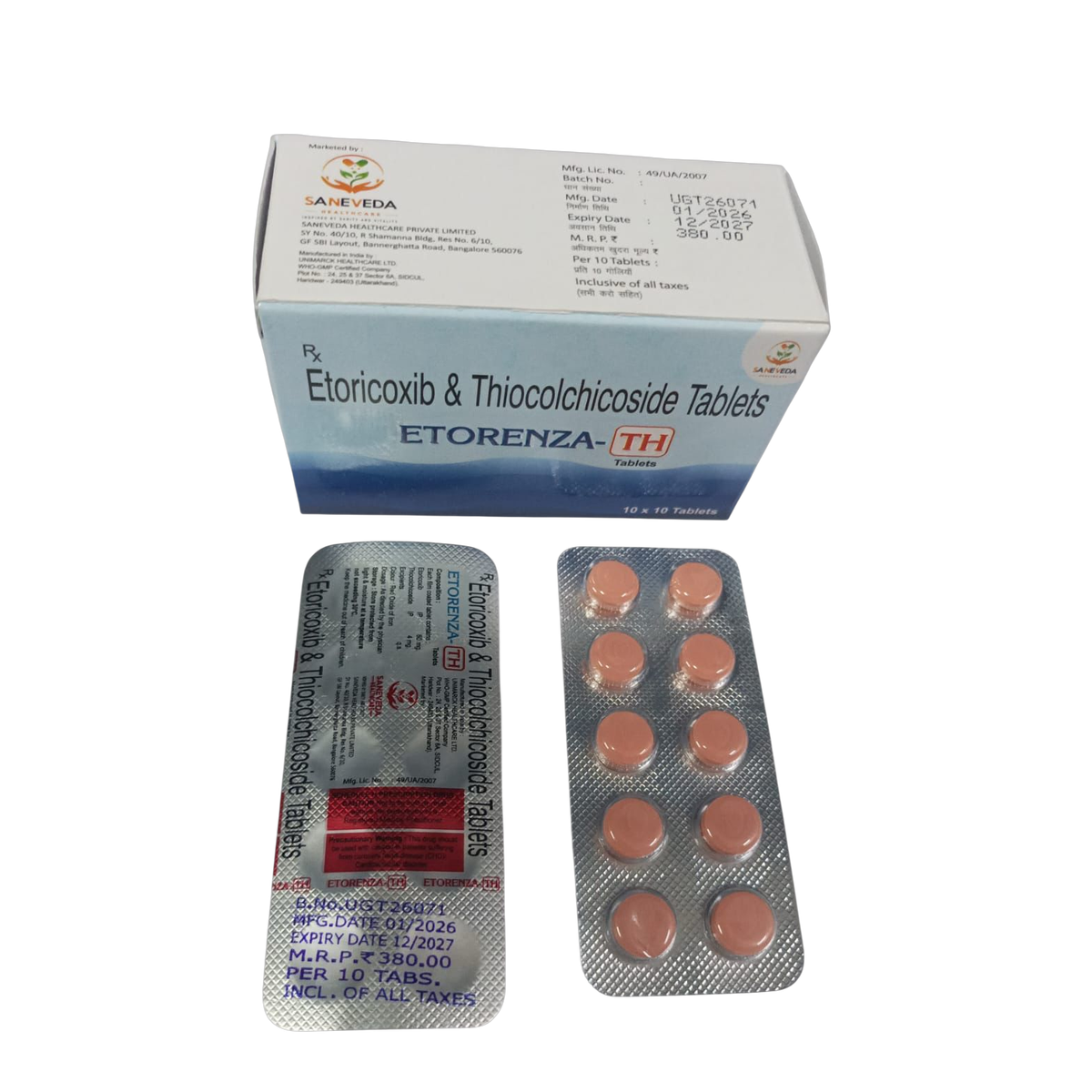
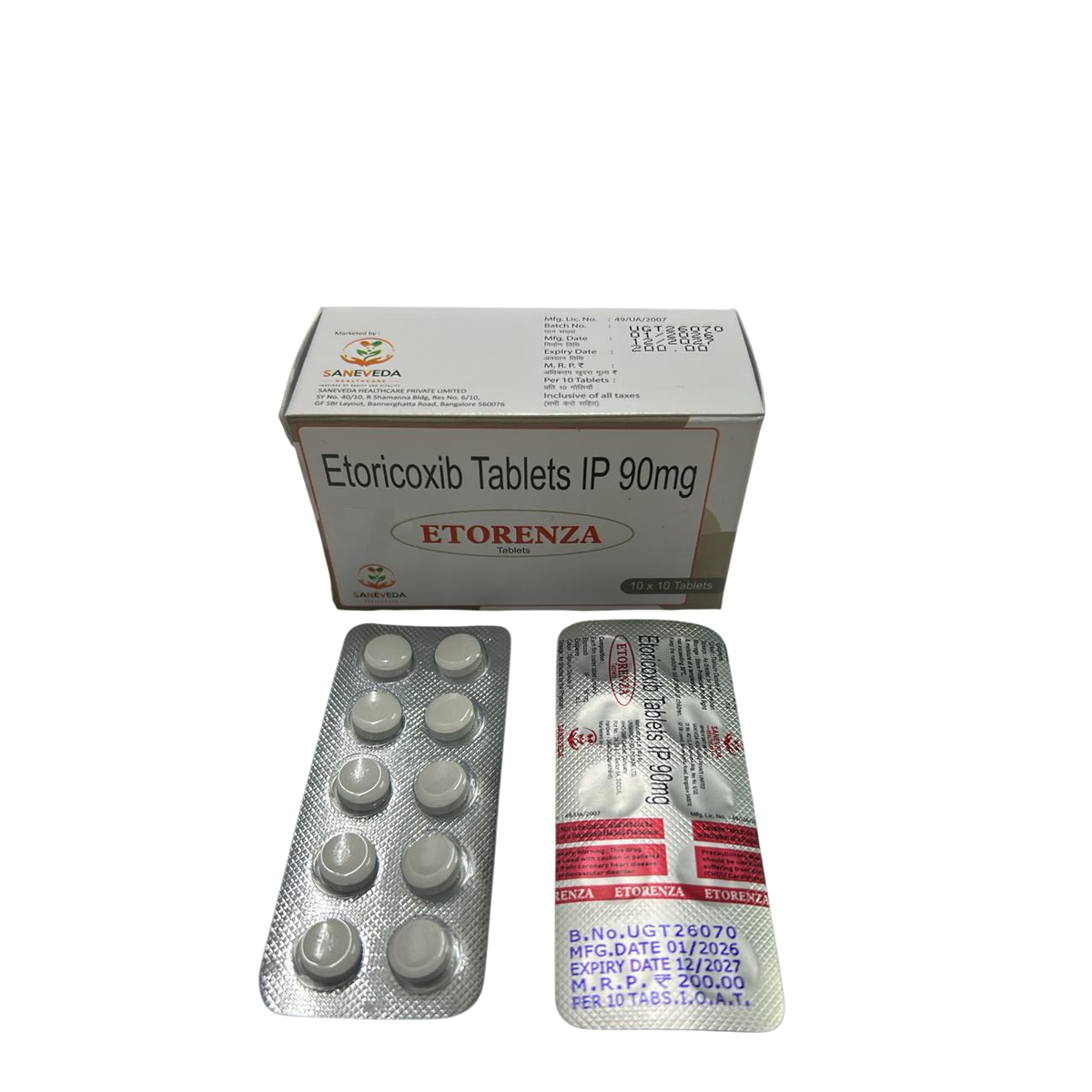
ETORENZA
Etoricoxib 90 mg
A selective COX-2 inhibitor for the relief of pain and inflammation in arthritis, gout and acute musculoskeletal pain — designed for effective analgesia with improved GI tolerability versus older NSAIDs.
Important Safety Information
NSAIDs including selective COX-2 inhibitors may increase the risk of serious cardiovascular events, including heart attack and stroke, which can be fatal. Risk rises with dose and duration. ETORENZA is contraindicated in established cardiovascular disease and uncontrolled hypertension.
Do not use if
Active peptic ulcer; severe liver dysfunction; severe kidney impairment; uncontrolled hypertension; congestive heart failure (NYHA II-IV); established ischaemic heart, peripheral arterial or cerebrovascular disease; pregnancy (especially third trimester); known hypersensitivity.
Warnings & precautions
Cardiovascular risk increases with dose and duration — monitor blood pressure. Use caution in the elderly, in renal impairment, and in patients with a history of GI bleeding. Use the lowest effective dose for the shortest time.
This is a summary. Read the full prescribing information and consult your doctor. Report side effects — see Report a Side Effect.
Overview
ETORENZA is a selective COX-2 inhibitor used for relief of pain and inflammation in osteoarthritis, rheumatoid arthritis, ankylosing spondylitis, gout and acute musculoskeletal pain.
Its COX-2 selectivity is designed to deliver effective analgesia with improved gastrointestinal tolerability compared with non-selective NSAIDs.
Composition & presentation
| Active ingredient(s) | Etoricoxib |
|---|---|
| Strength | 90 mg |
| Dosage form | Film-coated tablet |
| Pack size | 10 × 10 tablets |
| Schedule | Schedule H — prescription only |
| Storage | Store below 30°C in a dry place. Keep out of reach of children. |
How it works
ETORENZA blocks a specific enzyme that drives inflammation and pain, while being gentler on the stomach lining than older painkillers.
Read clinical detail (for HCPs)
Selective COX-2 inhibition reduces prostaglandin synthesis at sites of inflammation while sparing constitutive COX-1, with relatively preserved GI mucosal protection.
Indications
Osteoarthritis; rheumatoid arthritis; ankylosing spondylitis; acute gouty arthritis; post-operative pain; and chronic musculoskeletal pain.
Dosage & administration
60 to 120 mg once daily according to the indication (see prescribing information). Use the lowest effective dose for the shortest duration needed.
Do not change your dose or stop the medicine without consulting your doctor.
Side effects
Headache, dizziness, oedema (swelling), raised blood pressure, indigestion, nausea.
Raised liver enzymes, palpitations, insomnia.
Heart attack, stroke, severe skin reactions (SJS/TEN), heart failure, gastrointestinal bleeding — seek emergency care.
Drug interactions
Warfarin (monitor INR), antihypertensives (reduced effect), lithium, methotrexate, ciclosporin/tacrolimus.
Frequently asked questions
How is ETORENZA different from older painkillers?
Can I take it if I have heart problems?
How long can I take it?
Can I take it with blood thinners?
Does it upset the stomach?
When should I seek urgent care?
Help us improve patient safety. Report an adverse event or email pv@sanevedahealthcare.in. You can also call the national PvPI helpline on 1800-180-3024.