
Vitamin D deficiency
Despite abundant sunshine, a large share of Indians are vitamin D deficient — a silent contributor to bone pain, muscle weakness, fatigue and low immunity.
A "silent" deficiency hiding in plain sight
Vitamin D helps your body absorb calcium and keep bones and muscles strong. Your skin makes it from sunlight — but modern indoor lifestyles, sunscreen, air pollution, darker skin tone and covered clothing mean many people simply don't make enough.
Because the symptoms are vague — tiredness, aches, low mood — it is easily missed. A simple blood test confirms it, and correction is straightforward.
Common symptoms
Often subtle and easy to blame on a busy life — which is exactly why it goes untested.
Bone & back pain
A deep, dull ache, particularly in the lower back, hips and legs.
Muscle weakness & cramps
Difficulty climbing stairs or rising from a chair; frequent cramps.
Persistent fatigue
Tiredness and low energy that rest doesn't seem to fix.
Frequent infections & low mood
Vitamin D supports immunity and mood; low levels can affect both.
Who is most at risk
Indoor lifestyles
Office workers and students who get little midday sun exposure.
Older adults
Skin makes less vitamin D with age, raising the risk of bone loss.
Covered or sun-protected skin
Clothing, sunscreen and darker skin all reduce vitamin D production.
Pregnant & breastfeeding women
Higher requirements make deficiency more likely and more important to correct.
Urban, polluted cities
Air pollution filters the UVB rays needed to make vitamin D.
Obesity & certain conditions
Vitamin D can be "trapped" in fat tissue, and some gut conditions reduce absorption.
How deficiency is corrected
Confirm with a blood test
A 25-hydroxy vitamin D test tells your doctor whether you are deficient, insufficient or sufficient — and guides the dose.
Correct with a loading dose
Deficiency is typically corrected with high-dose cholecalciferol (vitamin D3), such as a 60,000 IU weekly regimen, for a defined period as advised by your doctor.
Maintain & retest
Once levels are restored, a lower maintenance dose plus sensible sun exposure keeps them there. A repeat test confirms success.
Too much vitamin D can be harmful. Take the regimen your doctor advises, based on your test result.
Our vitamin D product
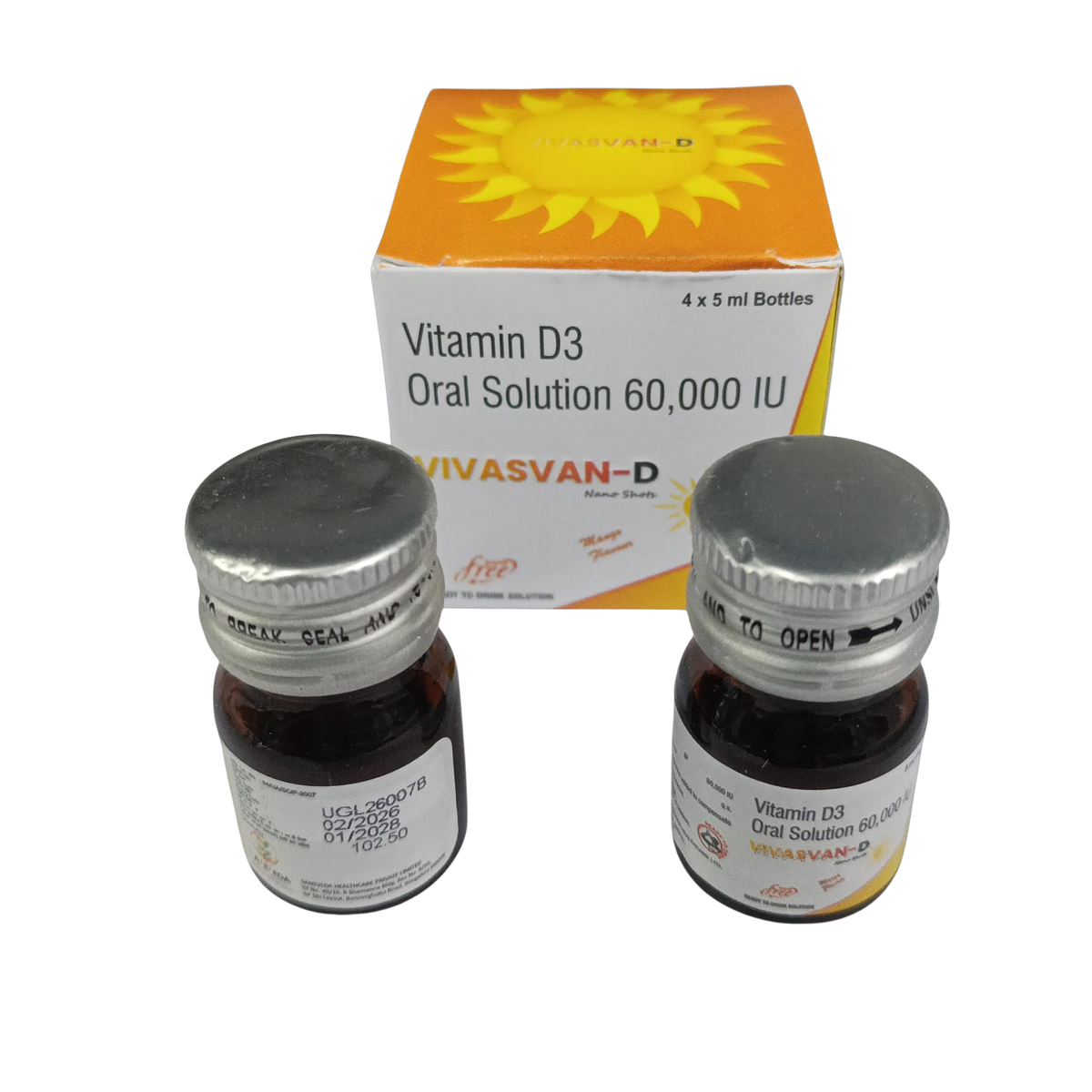
Frequently asked
If I live in a sunny country, how can I be deficient?
Why a 60,000 IU dose — isn't that a lot?
Can I just take vitamin D forever without testing?
Why an oral shot instead of a capsule?
Prescribed VIVASVAN-D?
Read the product page for full details, or reach our care team with any question.