
Musculoskeletal pain
Pain in the joints, back and muscles — arthritis, gout, post-operative pain and muscle spasm. Common, often inflammatory, and very treatable with the right approach.
Pain from joints, bones, muscles and the tissues around them
Musculoskeletal (MSK) pain is the body's response to inflammation, wear, injury or spasm in the structures that let you move. Unlike nerve pain, it usually responds well to anti-inflammatory medicines.
When a muscle also goes into protective spasm — common in acute lower-back pain — combining an anti-inflammatory with a muscle relaxant can break the pain-spasm cycle faster than either alone.
Common symptoms
Aching, stiff joints
Worse in the morning or after rest, easing a little with gentle movement.
Swelling & warmth
Visible inflammation over a joint, as in arthritis or a gout flare.
Sharp back pain with spasm
A "locked" lower back where the muscle tightens to protect the area.
Pain on movement
Difficulty climbing stairs, gripping, bending or turning.
Common causes & risk factors
Osteoarthritis
Age-related "wear and tear" of joint cartilage, commonly in the knees, hips and hands.
Rheumatoid & inflammatory arthritis
The immune system attacks the joints, causing pain, swelling and stiffness.
Gout
Uric-acid crystals trigger sudden, intense joint inflammation — often the big toe.
Lower-back pain
Strain, poor posture or a disc problem, frequently with muscle spasm.
Post-operative pain
Inflammation and soreness after orthopaedic or general surgery.
Sports & overuse injuries
Strains, sprains and tendon inflammation from repetitive load.
How musculoskeletal pain is treated
Reduce inflammation
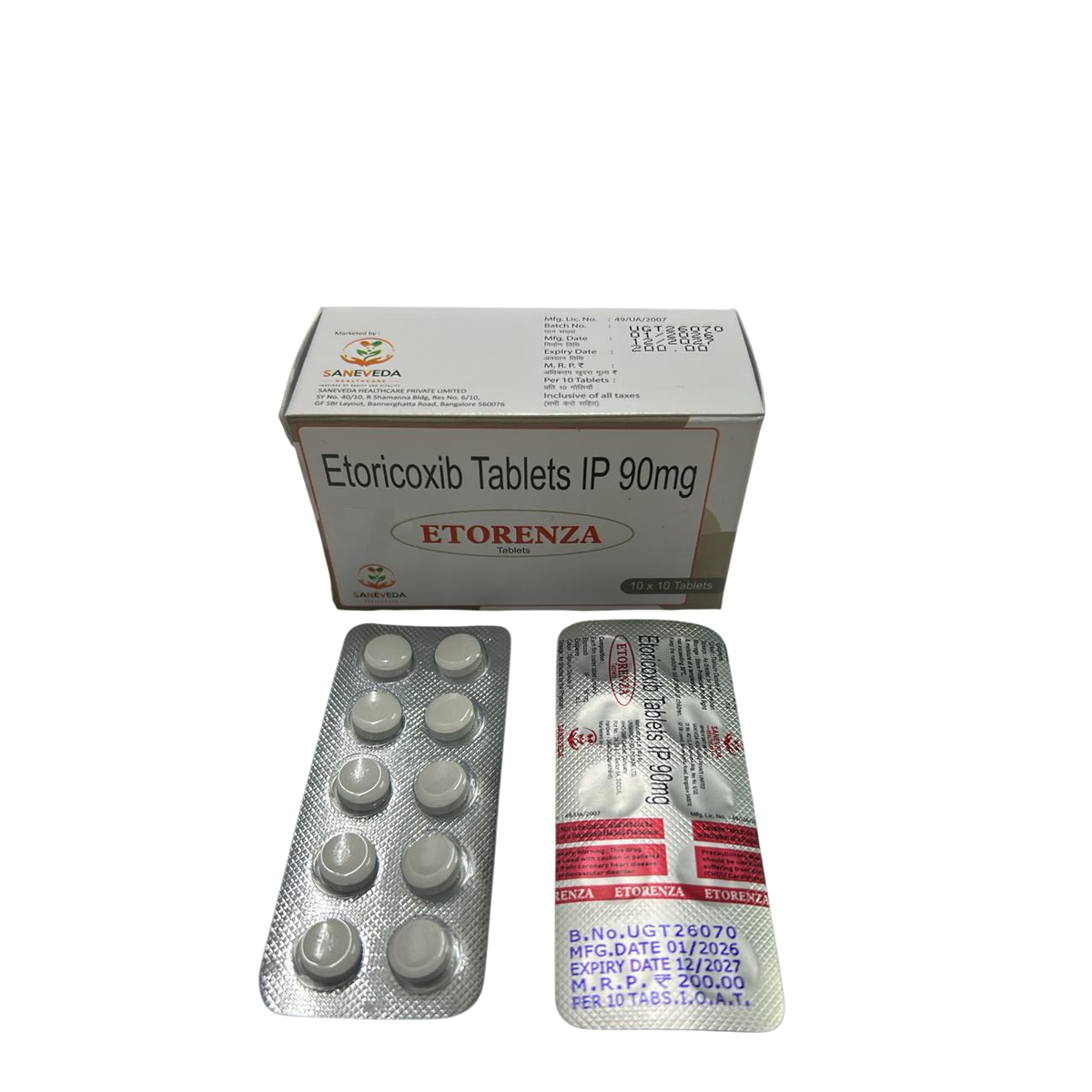
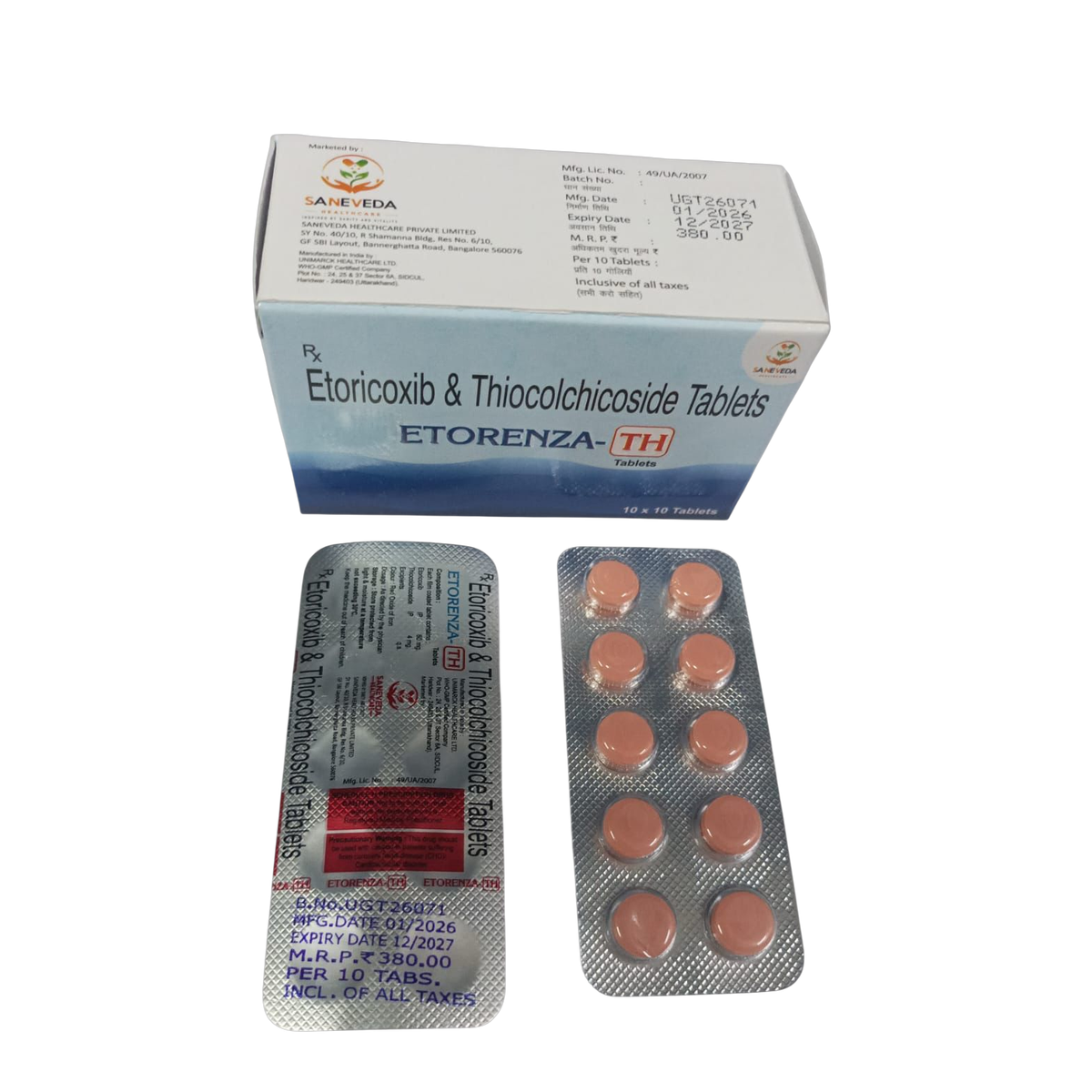
Selective anti-inflammatories (COX-2 inhibitors such as etoricoxib) lower pain and swelling with a gentler effect on the stomach than older NSAIDs.
Release the spasm
Where a muscle is in spasm, adding a muscle relaxant such as thiocolchicoside helps break the pain-spasm-pain cycle so you can move again.
Restore function
Short-course medication paired with movement, physiotherapy and cause-specific care (e.g. lowering uric acid in gout) gives the best long-term result.
Anti-inflammatories have important cautions (heart, kidney, stomach). Take them only as prescribed. All Saneveda medicines are Schedule H prescription drugs.
Our musculoskeletal pain products
Frequently asked
What is the difference between a COX-2 inhibitor and a normal painkiller?
Why has my doctor added a muscle relaxant?
Can I take these long-term?
Do I still need physiotherapy?
Prescribed ETORENZA or ETORENZA-TH?
Read the product page for your medicine, or reach our care team with any question.