
Neuropathic pain
Nerve pain — from diabetic neuropathy, shingles, or a trapped nerve — behaves differently from ordinary pain. Understanding it is the first step to treating it well.
Pain that comes from the nerves themselves
Most pain is a healthy alarm — you touch something hot, nerves report it. Neuropathic pain is different: the nerves are damaged or misfiring, so they send pain signals when there is no injury to report.
That is why it is often described as burning, electric, or pins-and-needles, why it frequently worsens at night, and why ordinary painkillers such as paracetamol often don't help. It needs medicines that act on the nerve signalling itself.
Common symptoms
If several of these sound familiar, it is worth asking your doctor specifically about nerve pain.
Burning or electric sensations
A hot, stinging, or shock-like pain, often in the feet, hands or along a limb.
Pins, needles & numbness
Tingling or a "dead" feeling that can come and go, or be constant.
Pain that is worse at night
Symptoms flare when you are still and trying to sleep, disturbing rest.
Sensitivity to light touch
Bedsheets, socks or a breeze can trigger pain that shouldn't hurt.
Common causes & risk factors
Diabetes
The most common cause in India. Long-term high blood sugar damages small nerves, typically starting in the feet (diabetic peripheral neuropathy).
Shingles (post-herpetic neuralgia)
Nerve pain that persists for months after a shingles rash has healed.
Sciatica & trapped nerves
A compressed nerve in the spine causing pain that shoots down the leg or arm.
Vitamin B12 deficiency
Low B12 impairs nerve health and can cause tingling and numbness.
Chemotherapy
Some cancer treatments damage peripheral nerves, causing lasting pain.
Injury or surgery
Nerves cut or crushed during trauma or an operation can misfire afterwards.
How nerve pain is treated
There is rarely one magic tablet. Good control usually combines the right medicine, the right dose, and time.
Treat the cause where possible
Controlling blood sugar, correcting a B12 deficiency, or relieving nerve compression addresses the root, not just the symptom.
Use medicines designed for nerves
Agents such as pregabalin calm overactive nerve signalling. Adding methylcobalamin (active B12) supports nerve repair, and in some cases a low-dose nerve-modulating antidepressant is combined for a multi-mechanism effect.
Titrate and stay consistent
Doses are usually built up gradually and taken regularly. Relief can take a couple of weeks — stopping early is the most common reason treatment "doesn't work."
Never start, stop or change a medicine without your doctor. All Saneveda medicines are Schedule H prescription drugs.
Our neuropathic pain products
Formulations designed for real-world adherence and multi-mechanism relief.
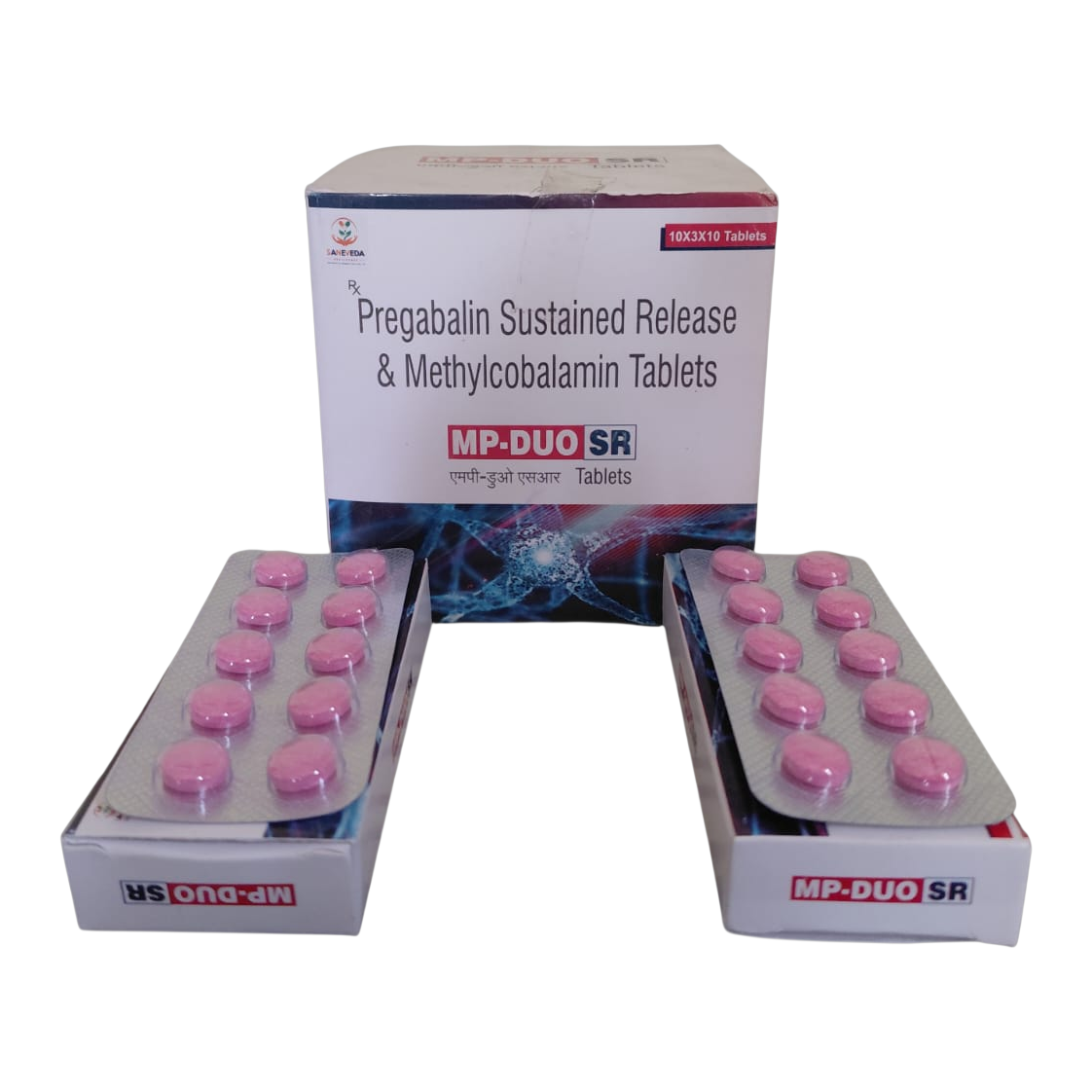
Once-daily sustained-release tablet for diabetic neuropathy and nerve-related pain.
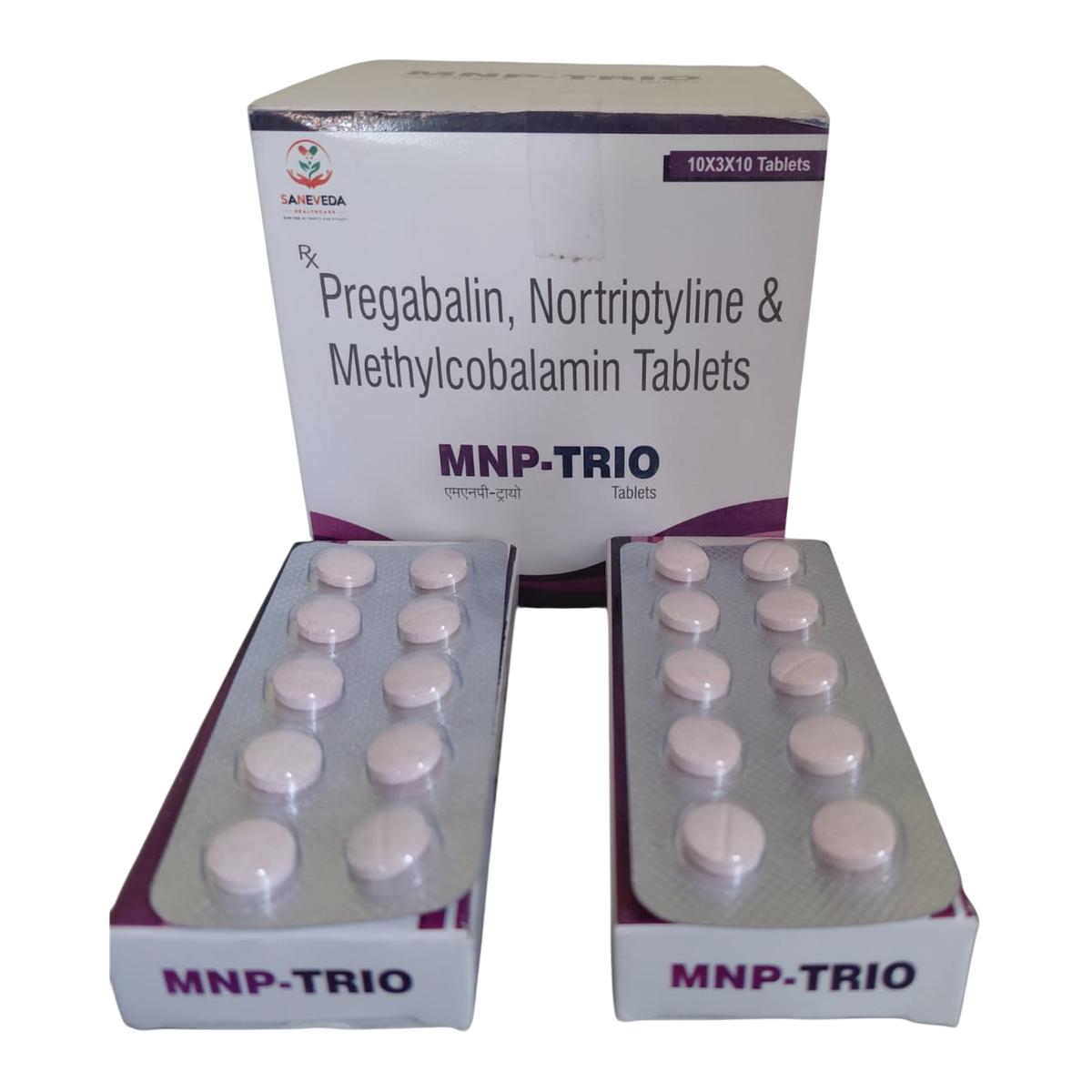
Triple-action formulation targeting nerve pain from three complementary angles.
Frequently asked
Why does my nerve pain get worse at night?
Will ordinary painkillers help?
How long before the medicine works?
Is nerve pain permanent?
Prescribed a Saneveda medicine for nerve pain?
Read the product page for your medicine, or reach our care team with any question.